Peptide therapy has gained massive attention in recent years. However, many people still struggle to achieve real results. So the real question is—why does peptide therapy work for some people but fail for others?
In this guide, we will break down everything you need to know about peptide therapy, its benefits, trusted providers, and how to choose the right treatment safely.
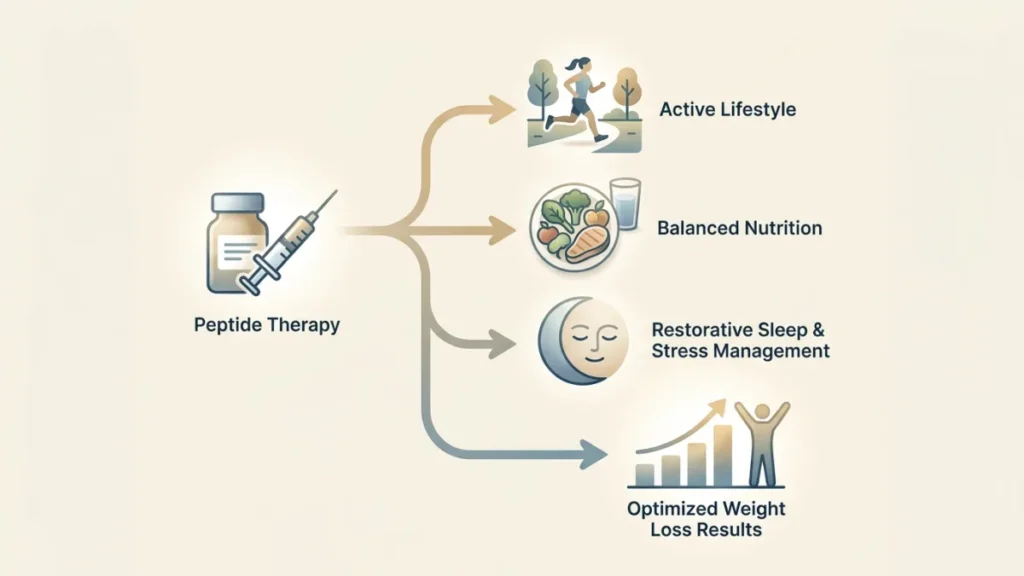
Peptide therapy is a modern wellness treatment that uses short chains of amino acids to signal specific functions inside the body.
Instead of acting like traditional medications, peptides work by supporting natural biological processes. For example, they may help regulate metabolism, improve recovery, and support hormone balance.
Additionally, trusted medical sources like WebMD explain that peptides play an essential role in cellular communication and overall health regulation.
To understand peptide therapy better, it helps to know how it functions in the body.
First, peptides bind to specific receptors on cells. Then, they trigger biological responses such as hormone release or tissue repair.
Moreover, depending on the type of peptide used, the effects may include:
On the other hand, results vary depending on dosage, quality, and medical supervision.
Although peptide therapy can be effective, many users do not see results. There are several reasons for this.
In many cases, people use low-quality or counterfeit products. As a result, the expected effects do not occur.
Even if the peptide is high quality, incorrect dosing can reduce effectiveness significantly.
Without professional supervision, treatment plans are often inconsistent.
Some users expect instant results. However, peptide therapy usually takes time.
Therefore, choosing the right provider is extremely important.
When used correctly, peptide therapy can offer several health benefits.
Certain peptides, especially GLP-1-based therapies, help control appetite and improve metabolism. As a result, weight loss becomes more sustainable.
In addition, peptides may enhance muscle repair and reduce recovery time after exercise.
Moreover, peptides like GHK-Cu support collagen production, which improves skin elasticity.
Some peptides also help improve sleep quality and mental clarity.
Here are some commonly used peptides in modern therapy:
However, not all peptides are suitable for everyone, so medical evaluation is necessary.
Choosing a trusted provider is the most important step for safety and results.
Peptide therapy is generally considered safe when it is properly prescribed.
However, safety depends on several factors:
On the other hand, self-medication or unregulated products may increase risks.
Therefore, it is always recommended to consult a qualified provider before starting treatment.
When selecting a clinic, keep the following in mind:
Additionally, avoid providers that promise unrealistic or instant results.
If you’re looking for a trusted and personalized approach, BBB Wellness LLC offers:
Start your journey here: https://bbbwellnessllc.com/
Peptide therapy can be safe when:
However, risks may include:
Always consult a qualified provider before starting treatment.
Before choosing a provider, check:
Avoid clinics that promise instant or unrealistic results.
GLP-1-based peptides are widely used for weight loss, but results vary depending on individual health conditions.
Some peptides are FDA-approved, while others require prescription and medical supervision.
Yes, possible side effects include mild irritation, hormonal changes, or fatigue if not properly managed.
Peptide therapy is one of the most promising advancements in modern wellness. From fat loss to anti-aging and performance enhancement, it offers a targeted and personalized approach to improving health.
However, success depends on:
If you’re ready to explore safe and effective peptide therapy, visit
https://bbbwellnessllc.com/ and get started with a customized plan today.